

Get the Latest Updates!

.svg)

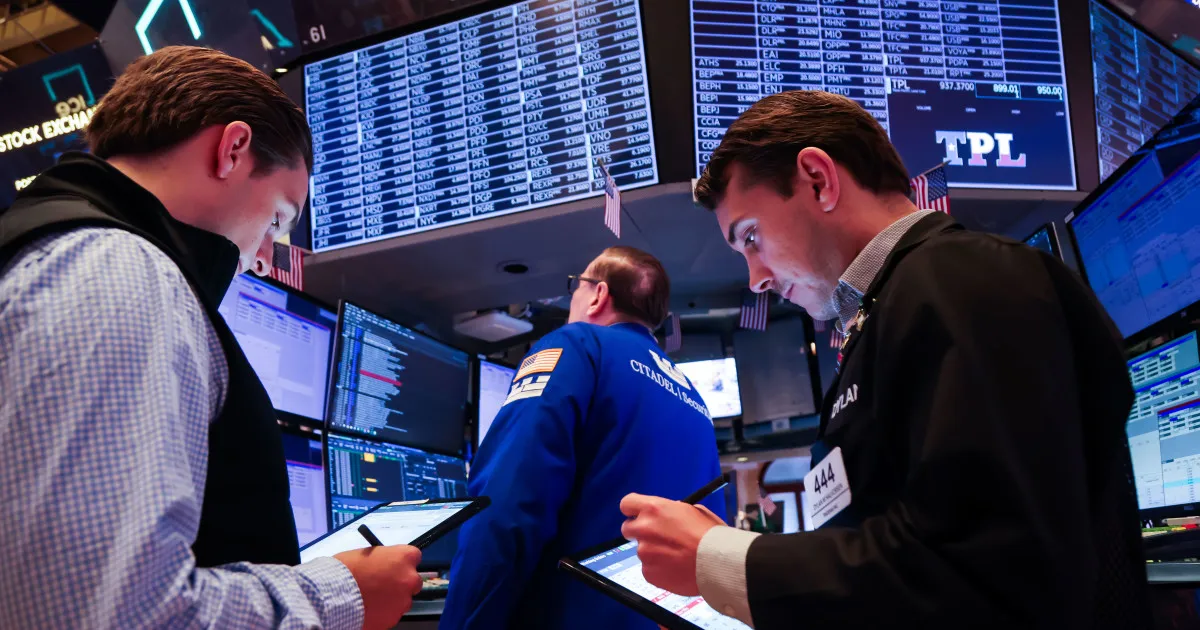

As enthusiasm around artificial intelligence continues to propel stock markets to record levels, a growing number of investors are asking a familiar question: are we watching another financial bubble form one that could eventually burst?
History suggests the answer isn’t black and white.
The S&P 500 climbed 16% in 2025, driven largely by AI heavyweights such as Nvidia, Alphabet, Broadcom, and Microsoft. At the same time, unease has been building over the massive sums Big Tech is pouring into AI infrastructure. Capital spending by Microsoft, Alphabet, Amazon, and Meta is projected to jump 34% to about $440 billion combined over the next year, according to data.
Beyond public markets, OpenAI has committed to spending more than $1 trillion on AI infrastructure a staggering figure for a privately held company that has yet to turn a profit. Adding to investor concern is the circular nature of many of these arrangements, where funding and spending cycle between OpenAI and a small group of publicly traded tech giants.
According to Brian Levitt, chief global market strategist at Invesco, periods of technological transformation have often been accompanied by excessive investment. He points to past revolutions such as railroads, electricity, and the internet as examples where capital poured in aggressively before demand fully materialized.
“At some point, infrastructure spending can overshoot what the economy needs in the short term,” Levitt said. “But that doesn’t mean the railroads weren’t completed or that the internet didn’t ultimately reshape the world.”
Still, with equity valuations inching higher and the S&P 500 logging its third consecutive year of double-digit gains, investor anxiety is understandable. Many are questioning how much upside remains and how severe the downside could be if AI fails to deliver on its promise. That risk is magnified by the fact that Nvidia, Microsoft, Alphabet, Amazon, Broadcom, and Meta now make up nearly 30% of the S&P 500, meaning any sharp selloff in AI stocks would ripple through the broader market.
“A bubble usually bursts in a bear market,” said Gene Goldman, chief investment officer at Cetera Financial Group, who does not believe AI stocks are currently in a bubble. “And we don’t see a bear market on the horizon.”
So how does today’s AI boom compare with past market bubbles?
One way to assess whether the AI-fueled rally has moved too far, too fast is to compare it with historical bull markets. Research from Bank of America strategist Michael Hartnett, examining 10 equity bubbles worldwide since 1900, found they lasted just over two and a half years on average and delivered gains of about 244% from trough to peak.
By contrast, the current AI-driven advance is entering its third year. Since the end of 2022, the S&P 500 has risen 79%, while the tech-heavy Nasdaq 100 has surged 130%.
While the data doesn’t point to a definitive conclusion, Hartnett cautions against abandoning equities solely out of bubble fears. Historically, the final phase of a rally tends to be the strongest, and missing it can be costly. As a hedge, he suggests selectively adding cheaper value exposures, such as UK stocks or energy companies.
Market Concentration
The S&P 500’s 10 largest companies now account for roughly 40% of the index a level of concentration not seen since the 1960s. That has unsettled some investors, including veteran strategist Ed Yardeni, who said in December that he no longer recommends overweighting technology stocks.
Market historians note, however, that today’s concentration is not without precedent. Paul Marsh, a professor at London Business School who has studied 125 years of global market returns, points out that leading stocks held similar weightings in the 1930s and 1960s. In 1900, railroads made up 63% of U.S. market value, compared with about 37% tied to technology at the end of 2024.
Fundamentals
Identifying bubbles in real time is notoriously difficult, largely because debates hinge on fundamentals and those metrics evolve, said Dario Perkins, an economist at TS Lombard.
“It’s easy to argue that ‘this time is different’ and that traditional valuation measures no longer apply,” he said.
Even so, some fundamentals still matter. Unlike the dot-com era, today’s AI leaders generally carry lower debt relative to earnings than companies such as WorldCom did in the late 1990s. Moreover, firms like Nvidia and Meta are already reporting meaningful profit growth tied to AI, something that was largely absent during the speculative boom 25 years ago.
That said, rising credit risk is making some investors uneasy. After Oracle sold $18 billion in bonds on Sept. 24, its stock fell 5.6% the following day and is down 37% since. Looking ahead, Meta, Alphabet, and Oracle are expected to raise a combined $86 billion in 2026, according to estimates from Société Générale.
Valuations
By some measures, the S&P 500 is trading at its highest valuation ever outside of the early 2000s. Its cyclically adjusted price-to-earnings ratio — developed by economist Robert Shiller and based on inflation-adjusted earnings over a decade — sits near historic extremes.
Optimists counter that while valuations are rising, the pace is far more measured than during the dot-com bubble. In 2000, Cisco traded at more than 200 times trailing earnings. Nvidia, by comparison, trades at under 50 times earnings today.
According to Janus Henderson fund manager Richard Clode, bubbles typically form when stock prices detach entirely from earnings growth. “We’re not at that point yet,” he said.
Investor Scrutiny
Talk of an AI bubble simmered throughout the year but intensified in November and December following warnings from investor Michael Burry and the Bank of England. data shows more than 12,000 news stories mentioned “AI bubble” in November alone — roughly matching the total from the prior ten months combined.
A December Bank of America survey found investors view an AI bubble as the market’s biggest “tail risk,” with more than half citing the Magnificent Seven as Wall Street’s most crowded trade.
That environment contrasts with the dot-com era, when enthusiasm for the internet went largely unquestioned, said Venu Krishna, head of U.S. equity strategy at Barclays. Today, scrutiny is growing, particularly as companies ramp up borrowing to fund AI investments.
“I wouldn’t dismiss the risks,” Krishna said. “But healthy skepticism is a good thing. That scrutiny may be exactly what prevents the kind of extreme excesses that lead to a crash.”
Image
Gallery.


Subscribe to our newsletter!
As a leading independent research provider, TradeAlgo keeps you connected from anywhere.

Explore
Related posts.

