

Get the Latest Updates!

.svg)

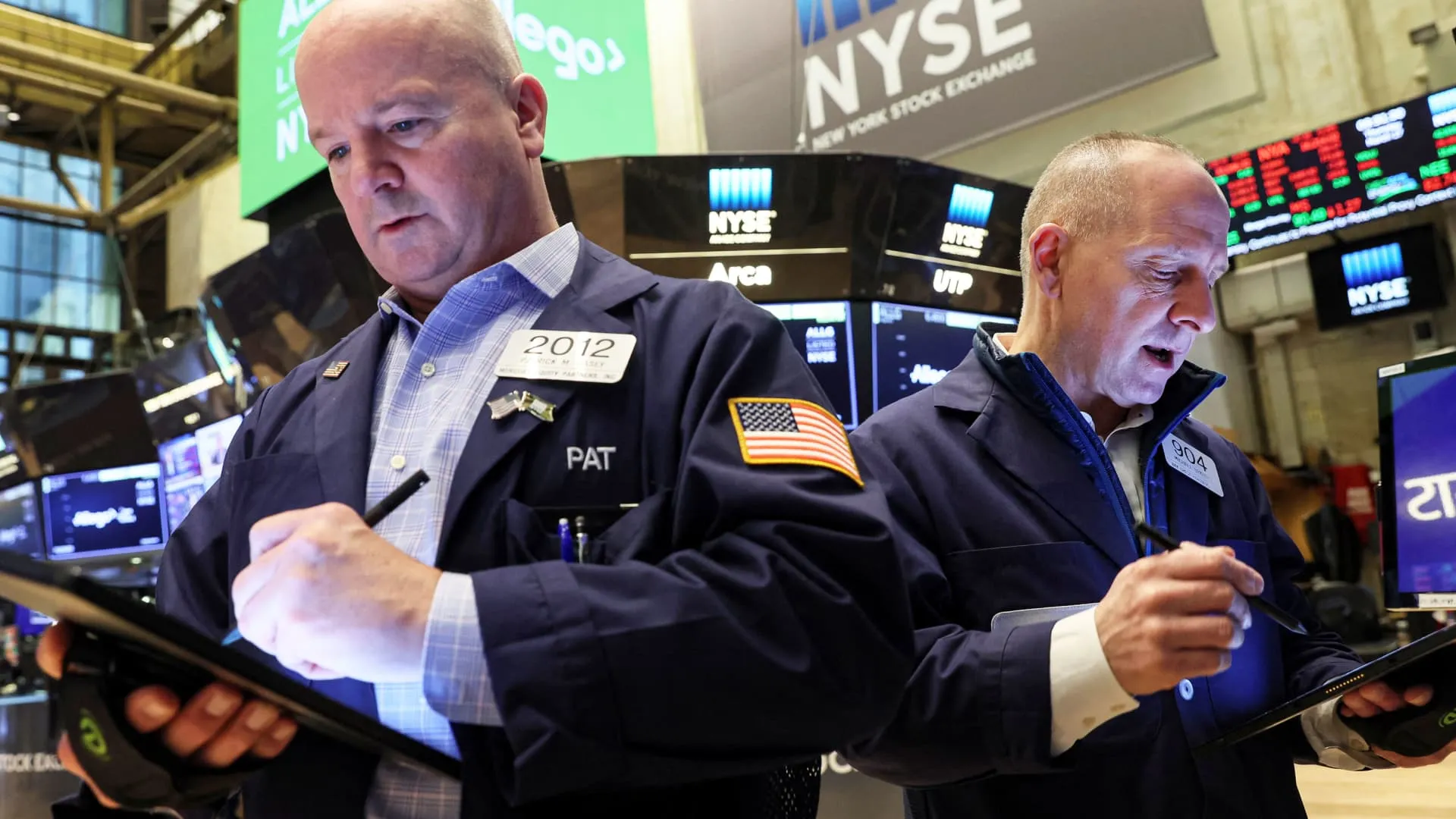

JPMorgan Trading Desk Turns Cautious on US Equities After Fed Probe
The Trump administration’s renewed challenge to the Federal Reserve’s independence is emerging as a potential headwind for U.S. equities, at least over the near term, according to strategists at JPMorgan Securities LLC. While broader economic and corporate fundamentals remain supportive, the political pressure now facing the central bank is unsettling investors and weighing on market sentiment.
Markets reacted swiftly after reports surfaced that the Federal Reserve is facing a criminal investigation. Late Sunday, the news triggered a risk-off move across asset classes. U.S. equity futures turned lower, the dollar weakened, and investors rotated into traditional safe havens such as gold. By 9 a.m. in New York, futures tied to the S&P 500 were down roughly 0.6%, signaling a cautious start to the trading week.
Federal Reserve Chair Jerome Powell confirmed that the central bank had been served subpoenas linked to his testimony regarding renovations at the Fed’s headquarters.
The development comes amid months of increasingly vocal criticism from senior Trump administration officials. President Donald Trump, Treasury Secretary Scott Bessent, and Kevin Hassett who has been floated as a possible future Fed chair have all publicly pushed for aggressive interest-rate cuts. Their comments have added to concerns that political considerations are being brought directly to bear on an institution long valued for its independence from partisan influence.
That independence has been a cornerstone of investor confidence in U.S. financial markets for decades. The perception that monetary policy decisions are guided by economic data rather than political pressure has helped anchor inflation expectations and stabilize markets during periods of uncertainty. Any threat to that framework, strategists warn, can quickly spill over into asset prices.
“Although macroeconomic conditions and corporate earnings trends still justify a tactically bullish outlook, the growing risk to Fed independence is an overhang for markets,” said Andrew Tyler, head of global market intelligence at JPMorgan. “As a result, we’re taking a more cautious stance in the very near term.” Tyler added that these dynamics could lead U.S. assets to underperform in the short run relative to other markets.
The administration has already taken steps that underscore these concerns. Efforts are underway to remove Fed Governor Lisa Cook, a move that would open the door for a new appointee aligned with the White House.
The U.S. Supreme Court is expected to hear arguments later this month on the legality of that action, introducing yet another layer of uncertainty. Powell, speaking Sunday night, suggested that the threat of criminal indictment stems directly from policy disagreements, rather than from any broader legal or ethical issue.
From an investor’s perspective, the situation creates a complex risk-reward setup. On one hand, economic growth remains resilient, and corporate balance sheets are generally healthy. On the other, heightened political interference in monetary policy could undermine confidence at a time when markets are already navigating shifting expectations around interest rates, inflation, and global growth.
Tyler noted that there may be opportunity amid the volatility. Any sign that tensions between the administration and the Fed are easing could quickly improve sentiment and create a short-term buying window for risk assets. At this stage, it remains unclear whether the Department of Justice will ultimately pursue indictments, or whether the situation will de-escalate before reaching that point.
Other market veterans echoed the importance of the issue. Matt Maley, chief market strategist at Miller Tabak + Co., emphasized that central bank independence is “extremely important” for maintaining investor trust.
When that trust is shaken, markets tend to reprice risk rapidly. “In our view, the near-term outlook for the stock market has turned negative,” Maley said, pointing to political uncertainty as a key driver of that shift.
For investors, the takeaway is not necessarily to abandon equities altogether, but to recognize that political risk has re-entered the equation in a meaningful way. Until there is greater clarity around the Fed’s position and the administration’s next steps, markets may remain sensitive to headlines. In the short term, caution may be warranted even as longer-term fundamentals continue to offer support once the fog clears.
Image
Gallery.


Subscribe to our newsletter!
As a leading independent research provider, TradeAlgo keeps you connected from anywhere.

Explore
Related posts.

