

Get the Latest Updates!

.svg)

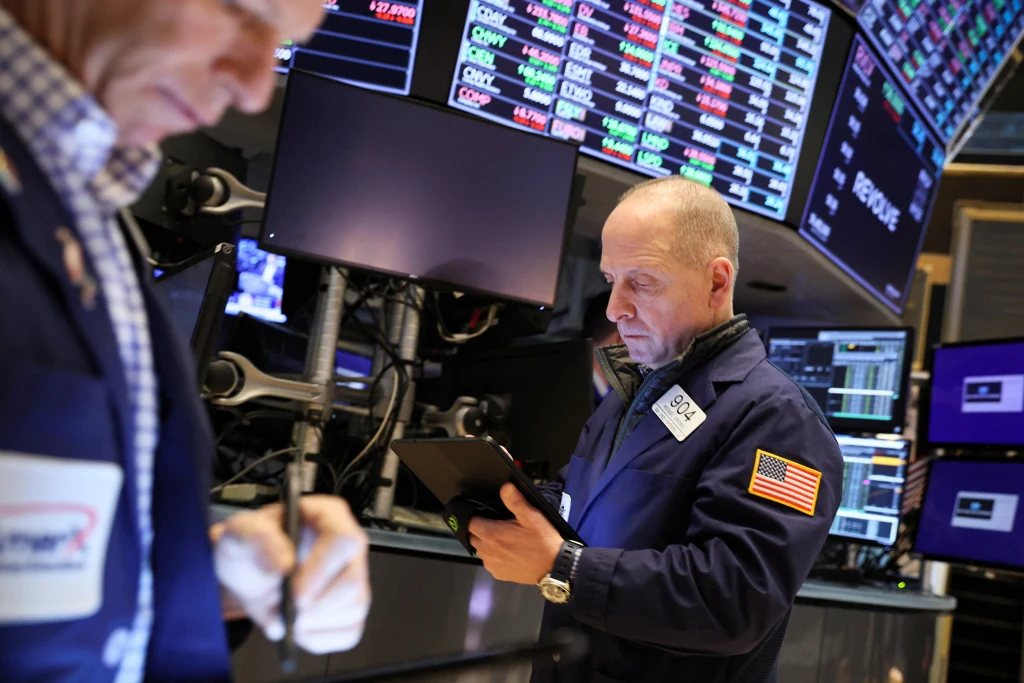

Wall Street investors locked in profits from this year’s standout artificial intelligence trades, pulling global equity benchmarks back from the edge of fresh records. At the same time, longer-term government bond yields pushed higher, adding another layer of pressure on risk assets.
A weak sales outlook from Broadcom Inc. rattled markets, sending the semiconductor giant’s shares down about 11% and dragging down peers across the chip sector. The move amplified concerns around lofty AI valuations, worries that were first ignited by Oracle Corp.
Shares of the enterprise software heavyweight slid after it projected higher capital spending and signaled that meaningful revenue gains from AI investments may take longer to materialize. Selling intensified on Friday after reports emerged of delays at several Oracle data center projects. Stocks tied to AI-related power and infrastructure also moved lower in sympathy.
The Nasdaq 100 dropped 1.9%, while the S&P 500 slipped 1.1%, reversing some of the momentum after the benchmark closed at a record the previous day. The Dow Jones Industrial Average and the Russell 2000 also eased back after recently touching all-time highs.
According to Louis Navellier, chief investment officer at Navellier & Associates, a pause after markets reached new peaks was hardly surprising.
“The AI bubble is deflating, but it’s not bursting,” Navellier said. He added that growing unease around OpenAI-related agreements could make near-term gains harder to sustain.
The pullback cooled the optimism that followed the Federal Reserve’s third consecutive interest-rate cut earlier in the week. Investors also weighed mixed signals from policymakers, who maintained projections for just one rate cut in 2026. Comments from several Fed officials underscored lingering concerns that inflation remains stubbornly high.
Yields on 30-year US Treasuries rose six basis points to a three-month high after Cleveland Fed President Beth Hammack said she would prefer a slightly tighter policy stance to keep pressure on inflation. Kansas City Fed President Jeff Schmid echoed similar worries, noting that consumer price pressures persist and arguing against the central bank’s recent decision to lower rates, given the economy’s continued resilience.
“Looking at the calendar, this feels like a session where Wall Street takes a breather after an intense run,” said Joe Mazzola, head trading and derivatives strategist at Charles Schwab. “There’s little in the way of major earnings or data, the weekend is approaching, and attention is already shifting to next Tuesday’s jobs report.”
As markets reassess stretched valuations in mega-cap technology stocks, diversification is becoming a bigger focus for investors. After a year in which a handful of tech giants powered most of the gains, rising concerns about heavy capital spending and elevated price multiples are encouraging a broader search for returns.
“Given current market conditions, diversification is the price worth paying to stay fully invested in equities,” wrote Goldman Sachs strategist Mark Wilson. He pointed to attractive opportunities in markets such as South Korea, Japan, China, and the wider emerging-market universe.
Despite the near-term volatility, strategists at Goldman Sachs remain constructive on the outlook for stocks. The firm expects equities to reach new highs next year, supported by steady economic growth and the expanding use of artificial intelligence to drive earnings. The team led by Ben Snider reaffirmed its forecast for the S&P 500 to approach 7,600 by 2026, implying roughly 10% upside from current levels.
That optimism is widely shared across Wall Street. Analysts at Morgan Stanley, Deutsche Bank, and RBC Capital Markets also anticipate US equities climbing more than 10% over the same period. Sentiment toward European stocks is similarly upbeat. In a survey of 17 strategists, none predicted a significant downturn, while four including teams at UBS and Deutsche Bank see gains of close to 13% from recent levels.
Some investors are even more bullish in the near term, betting that markets can continue to grind higher before the end of 2025 as money rotates into sectors that have lagged the tech rally. Robert Edwards, chief investment officer at Edwards Asset Management, expects the S&P 500 to reach 7,000 by year-end, with further gains extending into 2026.
“Our clients are much more concerned about protecting what they’ve already earned than chasing outsized returns,” Edwards said. “That’s classic ‘Wall of Worry’ behavior, not the mindset you see at the end of a bull market. Anxiety around AI valuations, elections, affordability, inflation, and even trade policy creates the very conditions markets tend to climb.”
With no major negative catalysts on the immediate horizon, some fund managers are positioning for a year-end rally. Karen Georges, who manages funds at Paris-based Ecofi Investissements, noted growing interest in underperforming stocks. “Many investors are looking to buy this year’s laggards,” she said. “It’s an attractive moment to diversify portfolios.”
In currency markets, dollar index stabilized after two days of declines, though it still logged a third straight weekly loss. In commodities, gold held onto modest gains, while silver retreated slightly after recently touching a record high.
Image
Gallery.


Subscribe to our newsletter!
As a leading independent research provider, TradeAlgo keeps you connected from anywhere.

Explore
Related posts.

