

Get the Latest Updates!

.svg)

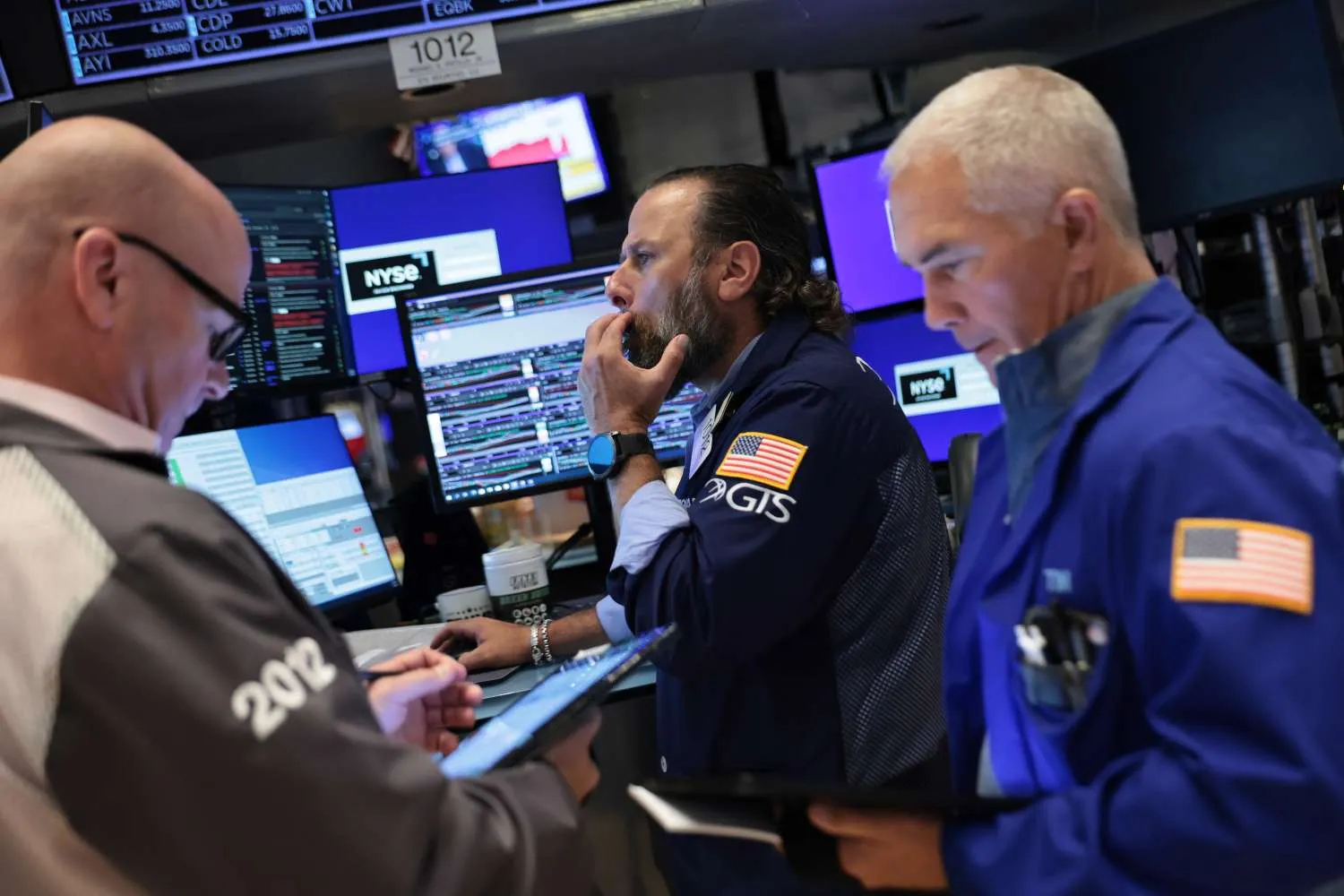

US Stock Futures Slide as Trump’s Tariff Threat Weighs in on Markets
European and US equity futures came under pressure while traditional safe-haven assets rallied after President Donald Trump unveiled plans for new tariffs targeting eight countries that have pushed back against his efforts to acquire Greenland. The renewed trade tensions weighed on risk sentiment, sending the dollar lower against most major currencies.
Futures tied to major European stock benchmarks slid 1.3%, while contracts linked to the S&P 500 dropped 0.9% as investors reacted to the prospect of escalating tariffs. Asian markets showed more resilience, with shares trimming earlier declines to trade largely flat. South Korea, often viewed as a proxy for global artificial intelligence investment trends, stood out with a 1.3% gain.
The shift toward defensive positioning was evident across asset classes. Gold climbed 1.6% to $4,670 an ounce, while silver jumped 3.4%, with both metals reaching fresh record highs. Cryptocurrencies, including Bitcoin, moved in the opposite direction, retreating as risk appetite cooled. In currency markets, the euro erased early losses and pushed higher, while Treasury futures advanced alongside German and French government bonds. Cash trading in US Treasuries was closed due to a US holiday.
The return of tariff-related anxiety comes at a delicate moment for markets. Risk assets have been supported by steady corporate earnings and sustained investment tied to artificial intelligence. Stocks recently pushed to record levels after rebounding from an April selloff that followed the introduction of historically high US tariffs. Trump’s latest threats now pose a new test for that rally.
“The prospect of tariffs aimed at fellow NATO members introduces another layer of uncertainty into the global trade outlook,” said Tim Waterer, chief market analyst at KCM Trade. “That uncertainty is keeping markets on edge, with traders opting for caution until there’s more clarity on how this develops.”
Over the weekend, Trump announced that a 10% tariff would be imposed starting Feb. 1 on imports from European nations that have publicly supported Greenland in response to US threats to take control of the semi-autonomous Danish territory. He added that those levies would rise to 25% by June unless an agreement is reached for what he described as the “complete and total purchase of Greenland.”
The tariffs would affect Denmark, Norway, Sweden, France, Germany, the UK, the Netherlands, and Finland. The announcement triggered swift pushback from European leaders, who are now preparing to block approval of a trade agreement finalized last year. TradeAlgo reported that French President Emmanuel Macron may push to activate the European Union’s anti-coercion instrument, the bloc’s strongest mechanism for responding to economic pressure.
Analysts warned that the latest escalation underscores the fragile state of global trade relations. “The end result of these renewed tensions is uncertain, but one thing has been clear for some time: trade and tariff certainty no longer exists,” analysts including ING Bank’s global head of macro, Carsten Brzeski, wrote in a note. “A full-scale trade war between the US and the EU would ultimately produce only losers.”
Trump’s comments have also raised questions about potential shifts in capital flows. According to George Saravelos, Deutsche Bank’s global head of foreign-exchange research, European governments could respond by reducing their exposure to US assets, a move that would likely support the euro. Europe remains the largest foreign lender to the US, holding roughly $8 trillion in American equities and bonds—nearly double the holdings of the rest of the world combined.
Elsewhere, economic data from China offered a mixed backdrop. The country’s gross domestic product expanded by 5%, according to figures released Monday by the National Bureau of Statistics, confirming an estimate President Xi Jinping shared in his New Year’s Eve address and matching growth recorded in 2024. Despite meeting the government’s target, Chinese market indicators fluctuated, suggesting investors were unconvinced the data would meaningfully shift near-term policy expectations.
Attention was also on Japan, where Prime Minister Sanae Takaichi is expected to outline her policy agenda at a press conference later Monday ahead of an election that could be held as soon as Feb. 8. In bond markets, yields on Japan’s 30-year government debt climbed 10 basis points to 3.58%, the highest level since the bond was introduced. Yields on 10- and 20-year notes also rose to their highest levels since 1999.
Looking ahead, strategists expect Europe’s equity markets to feel the greatest impact when trading opens, should selling pressure intensify. While Trump’s remarks have revived elements of the so-called “Sell America” trade, some investors believe any weakness could prove short-lived.
David Forrester, a senior strategist at Credit Agricole in Singapore, said markets may still anticipate a rebound in the dollar if tensions ease. “Traders will also be watching for signs of the ‘TACO trade,’” he said, referring to a pattern where Trump threatens tariffs only to retreat later. The term, short for “Trump Always Chickens Out,” reflects a belief among some investors that aggressive rhetoric is often used as leverage rather than a signal of lasting policy change.
For now, markets remain caught between strong underlying fundamentals and renewed political uncertainty—leaving investors focused on headlines and braced for volatility.
Image
Gallery.


Subscribe to our newsletter!
As a leading independent research provider, TradeAlgo keeps you connected from anywhere.

Explore
Related posts.

