

Get the Latest Updates!

.svg)

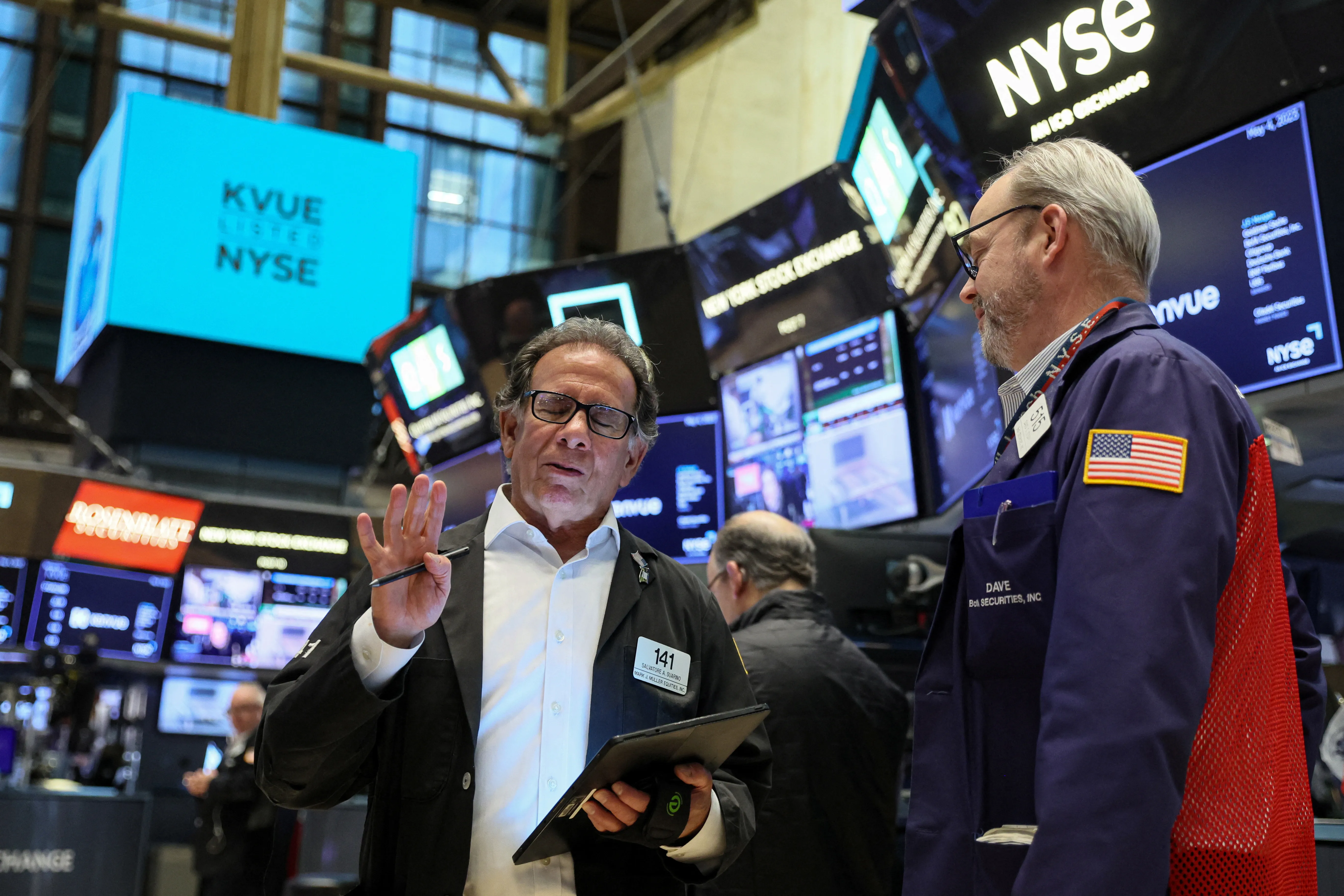

Wall Street Signals Green Light for Trump’s Market Shaking Policy Agenda
The opening weeks of the year have delivered a series of political developments that, in another era, might have sent shockwaves through global financial markets. A foreign leader was taken into custody. The US Department of Justice launched an inquiry into the Federal Reserve. And the White House expanded its reach into new areas of American commerce with a series of disruptive policy moves.
Yet markets have barely flinched. Instead, risk assets have surged, extending a rally fueled by investor confidence that has increasingly shielded President Donald Trump’s assertive policy agenda. Rather than acting as a constraint, buoyant markets appear to be reinforcing Washington’s appetite for bold action.
The scale of risk-taking is hard to ignore. Equity-focused exchange-traded funds are seeing January inflows running at roughly five times the typical pace for the month. Over the past three months alone, these funds have absorbed a record $400 billion. Leveraged long ETFs now hold about $145 billion in assets, dwarfing the $12 billion parked in products designed to profit from market declines.
Cash allocations have fallen to historic lows, according to Bank of America. Meanwhile, credit markets are behaving with a confidence reminiscent of 2007, as junk-bond spreads tighten even while corporate borrowing accelerates.
Such market strength is giving the White House ample room to maneuver. Some observers argue it may even be emboldening policymakers to push further.
“The president is clearly treating the stock market as a performance metric,” said Mark Malek, chief investment officer at Siebert Financial. “From his perspective, the numbers say he’s winning. That kind of feedback can encourage the administration to lean harder into policies it hasn’t fully explored yet. In short, investors should be prepared for surprises.”
History shows the relationship cuts both ways. In April, markets reacted sharply to the threat of sweeping new tariffs that would have disrupted global supply chains. The S&P 500 sold off quickly, prompting the administration to soften its stance. It was one of the few instances during Trump’s second term when market backlash appeared to directly influence policy decisions.
Today, however, political shocks are largely being dismissed as background noise. Many investors believe that if markets were to revolt again, the White House would respond as it did last spring. Until then, capital continues to flow into themes such as artificial intelligence, industrial recovery, and a rebound in cyclical sectors.
Investor positioning reflects that optimism. The equal-weighted S&P 500 ETF has outperformed the traditional cap-weighted version so far this year, and one major fund tracking the broader index has attracted $3.7 billion in new inflows.
Small caps are also gaining traction, with the Russell 2000 rising 2% over the past week while the S&P 500 edged lower. These trends suggest growing confidence that economic growth will lift a wider range of stocks beyond mega-cap technology names.
“We’re seeing solid growth without renewed inflation pressure,” said Jack McIntyre, portfolio manager at Brandywine Global Investment Management. “The economy looks stable, inflation is behaving, and there’s probably a bit of fear of missing out playing into investor behavior at this point in the year.”
A steady stream of upbeat economic data has reinforced that view. Jobless claims continue to point to a resilient labor market, while US factory output unexpectedly rose in December. Together, these data points are strengthening the belief that growth is holding up even as inflation cools, further fueling risk appetite.
The options market tells a similar story. Despite headlines involving proposed caps on credit card interest rates, tougher rhetoric toward Iran, and the seizure of Venezuelan oil assets, volatility remains subdued.
The VIX, a key gauge of expected stock-market swings, is sitting in the 17th percentile of its five-year range. Skew, which measures the cost of insuring against sharp selloffs, is also below average. Demand for downside protection, including index puts and tail-risk hedges, remains muted.
“Investors have been rewarded for looking past geopolitical risks for so long that it will likely take something very concrete to dent their confidence,” said Peter Atwater, founder of Financial Insyghts.
Not every policy move out of Washington is viewed negatively. Venezuelan oil flowing through Western markets could help ease supply pressures, while a cap on credit card rates might support consumer spending among lower-income households in the short term. Still, the broader picture is striking. With asset prices rising and volatility compressed, the administration appears to be operating with unusually little market resistance.
The bigger risk may not lie in any single policy misstep. Instead, it’s the market’s collective willingness to absorb repeated shocks. When positioning becomes heavily skewed in one direction, even a modest shift in sentiment can trigger an outsized reaction.
Even among more cautious investors, a sharp pullback would likely be met with renewed buying.
“There’s a meaningful group of institutional investors who would step in once downside risks become clearer,” said Amy Wu Silverman, head of derivatives strategy at RBC Capital Markets. “The same investors who were burned in early April probably remain more defensive than the headlines suggest. If we saw a large, multi-standard-deviation selloff, they’d likely move quickly to put money to work.”
Image
Gallery.


Subscribe to our newsletter!
As a leading independent research provider, TradeAlgo keeps you connected from anywhere.

Explore
Related posts.

