

Get the Latest Updates!

.svg)

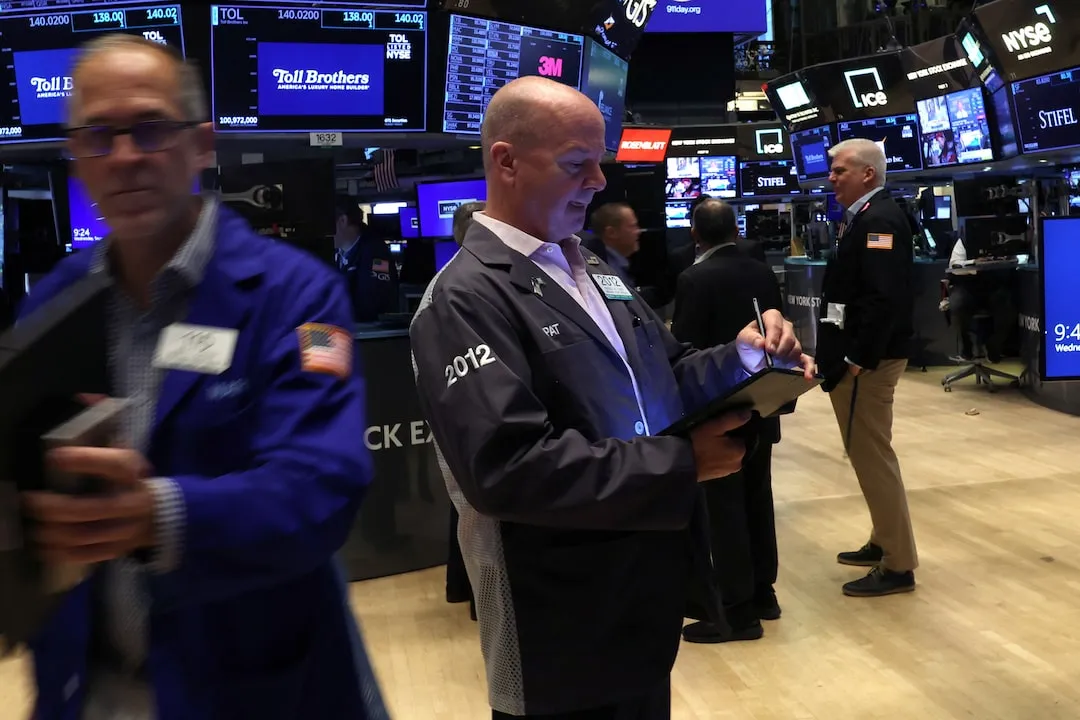

S&P 500 Poised For Its First Back-to-Back Weekly Drop Since Early Summer
US stocks are wrapping up a choppy trading week under pressure, as investors reassess a brief market rebound and turn their attention to the final batch of economic data before the Federal Reserve’s highly anticipated policy decision next week. After two days of modest gains, equity momentum faded, leaving the S&P 500 on track for its first two-week losing streak since June.
The pullback reflects growing caution on Wall Street, where traders are weighing resilient corporate earnings against lingering concerns about interest rates, economic growth, and sector-specific headwinds. While recent rallies offered short-term relief, they have not been enough to reverse the broader sense of uncertainty that has shaped market behavior in recent sessions.
By late week, US equities posted mild declines across major benchmarks. The S&P 500 edged lower, while the Dow Jones Industrial Average and Nasdaq Composite also struggled to maintain upward traction. Investors appeared hesitant to take on fresh risk ahead of upcoming inflation and labor market reports, which could influence how policymakers approach monetary policy in the months ahead.
Corporate news played a central role in market moves. Intel Corp. suffered a sharp selloff, plunging roughly 14% after issuing a weaker-than-expected outlook. The chipmaker cited manufacturing challenges and execution issues, raising fresh concerns about its ability to regain momentum in an increasingly competitive semiconductor landscape. The disappointing guidance weighed heavily on the technology sector and dampened broader market sentiment.
In contrast, Nvidia Corp. posted modest gains, rising about 1.6% after reports that Chinese authorities have informed domestic technology companies they may begin preparing orders for Nvidia’s H200 artificial intelligence chips. The development offered a boost to investor confidence, signaling potential easing of restrictions and sustained global demand for advanced AI hardware. Nvidia’s performance underscored the continued strength of companies closely tied to artificial intelligence and data center investment trends.
Despite Nvidia’s advance, gains within the tech sector were uneven, reflecting a more selective market environment. Investors have increasingly differentiated between companies with strong growth visibility and those facing operational or regulatory challenges. This shift has contributed to narrower market leadership and heightened volatility beneath the surface of major indices.
Small-cap stocks also lagged during the week, underperforming the broader US equity market after a prolonged stretch of relative strength. The Russell 2000 index fell behind the S&P 500 following a 14-day run in which smaller companies had outpaced large-cap peers. The reversal suggests investors are rotating back toward larger, more established firms amid rising uncertainty and tighter financial conditions.
The bond market offered little clarity, with Treasury yields holding relatively steady as traders awaited key economic indicators. Yields remain elevated compared with earlier in the year, reinforcing concerns that borrowing costs may stay higher for longer. That dynamic continues to pressure interest-rate-sensitive sectors and has prompted investors to reassess valuations across equities.
Attention is now firmly focused on the Federal Reserve, which is set to deliver its next policy decision in the coming days. While inflation has cooled from its peak, policymakers have emphasized the need for sustained progress before easing financial conditions. Markets are pricing in the possibility that rates could remain restrictive well into next year, a scenario that has weighed on risk assets.
Economic data released ahead of the Fed meeting will be closely scrutinized. Reports on consumer spending, employment trends, and price pressures are expected to shape expectations around the timing and pace of any future rate cuts. Even small surprises could trigger outsized market reactions given the current fragile sentiment.
Despite the recent pullback, some strategists view the decline as a healthy pause following a strong rally earlier in the year. Corporate earnings have largely exceeded expectations, and the US economy has shown resilience despite higher interest rates. However, elevated valuations and geopolitical uncertainty have made investors more cautious, leading to increased volatility and frequent sector rotations.
As markets head into the final trading days before the Fed’s announcement, investors appear focused on managing risk rather than chasing returns. Defensive positioning, selective stock picking, and diversification across asset classes have become increasingly important strategies in the current environment.
For now, the S&P 500’s potential two-week losing streak serves as a reminder that market leadership can shift quickly. With monetary policy, corporate fundamentals, and global developments all in play, investors are bracing for continued swings while looking for clearer signals about the next phase of the market cycle.
Image
Gallery.


Subscribe to our newsletter!
As a leading independent research provider, TradeAlgo keeps you connected from anywhere.

Explore
Related posts.

