

Get the Latest Updates!

.svg)


Stocks Struggle While Treasury Yields Push Higher Amid Fed Concerns
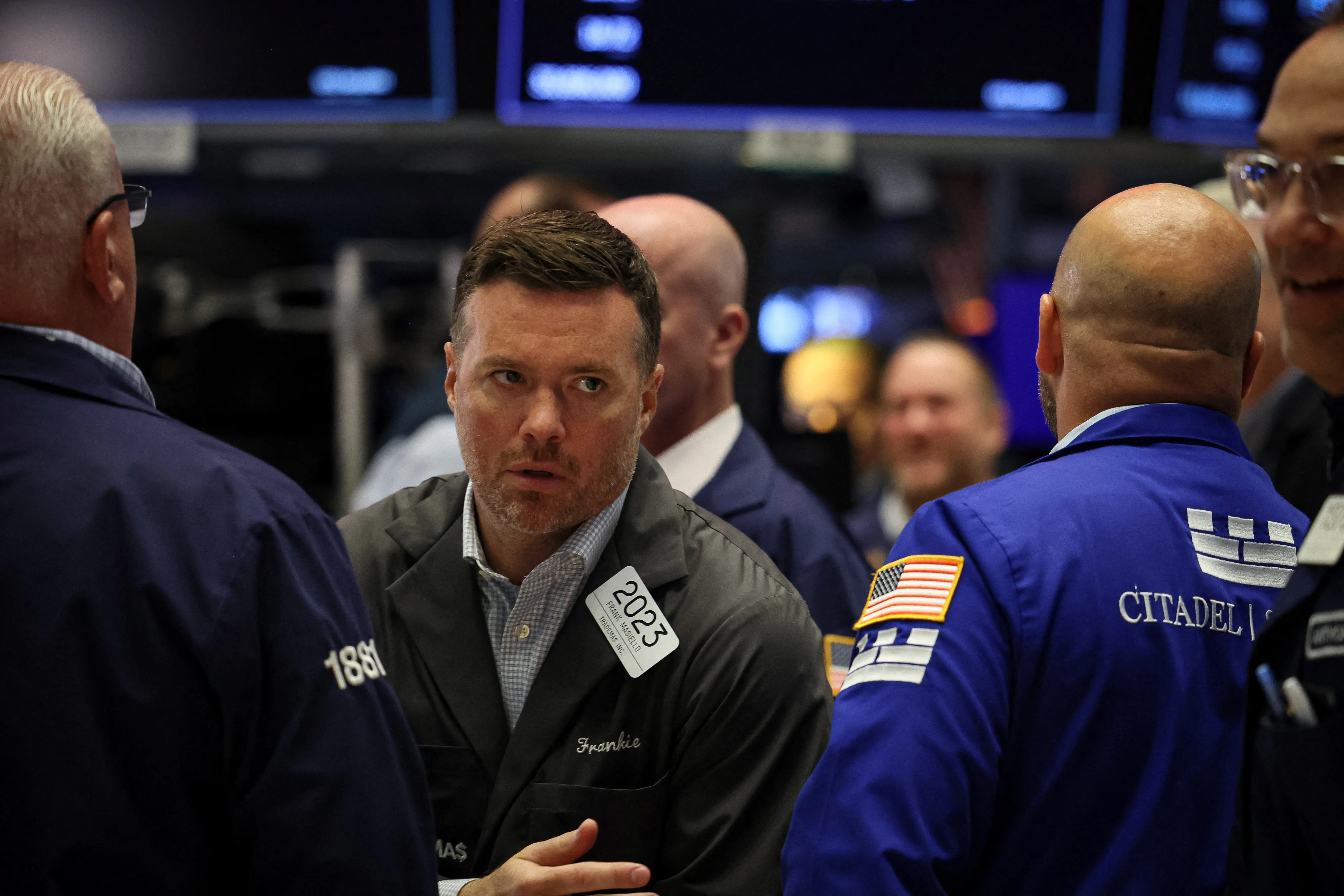
Global equities were mixed on Tuesday, while Treasury yields crept higher once again as investors grew increasingly uneasy about how quickly the Federal Reserve might ease policy after this week’s widely expected rate cut.
MSCI Inc.’s global equity benchmark slipped 0.1%, dragged lower by a 0.5% decline across Asian markets. US equity futures hovered near unchanged levels, and Euro Stoxx 50 contracts edged slightly into the red.
Bond markets saw more decisive movement: Australian yields tumbled following hawkish signals from policymakers, and demand for Japanese government bonds underwhelmed at a key five-year auction.
The Fed is still on track to deliver a 25-basis-point rate cut on Wednesday, but the bigger concern for traders is what comes next. Persistent inflation and a lack of updated economic data brought on by the longest US government shutdown in history have intensified divisions inside the central bank.
As a result, expectations for future easing have shifted. After this week’s cut, money markets now anticipate just two additional reductions by the end of 2026, compared with three projected only a week ago.
“Investors are taking their chips off the table as they wait for the Fed decision,” said Frederic Neumann, chief Asia economist at HSBC Holdings Plc. “With uncertainty lingering around the Fed’s path in 2026, market participants will be parsing the FOMC’s statement and projections with extra care. The cautious mood in US trading overnight is spilling into Asia today.”
US Treasury yields continued their upward drift. Both the 10-year and 2-year notes rose one basis point early Tuesday. On Monday, the benchmark 10-year yield climbed four basis points to its highest level since September, extending a wave of selling that has spread across European and Japanese bond markets.
Despite that move, demand for shorter-term US debt remained resilient: a $58 billion auction of three-year notes cleared at a lower-than-forecast yield, indicating stronger-than-expected appetite. The Treasury will follow with a $39 billion 10-year sale on Tuesday and a $22 billion auction of 30-year bonds on Thursday.
In Australia, the Reserve Bank held interest rates steady for a third consecutive meeting an outcome broadly anticipated by economists. Even so, yields on Australia’s three-year notes surged to their highest level since November after the central bank warned that inflation risks had shifted to the upside. Governor Michele Bullock also revealed that policymakers discussed the possibility of a 2026 rate hike during the meeting. The Australian dollar strengthened against the US dollar following the announcement.
Japan’s bond market also faced pressure. A sale of five-year government notes received weaker demand compared with the average over the past year, reflecting growing expectations that the Bank of Japan may raise rates as soon as next week. Finance Minister Satsuki Katayama said she is monitoring market movements closely, with the 10-year JGB yield hovering near 2% a level not reached since 2006.
The yen slipped further against the greenback after weakening on Monday, when a magnitude-7.6 earthquake struck off Japan’s northeast coast. Despite broader market caution, shares of construction companies and insurers moved higher Tuesday as investors anticipated rebuilding and claims-related activity.
Across broader markets, the US dollar index was steady. Bitcoin retreated roughly 1.5%, extending a slight pullback after recent gains. Precious metals were rangebound: both gold and silver stabilized after falling on Monday. Oil prices were little changed as well, holding steady after posting their sharpest decline in nearly three weeks. Traders are now focused on upcoming supply and inventory reports to gauge how severe the current glut may be.
Image
Gallery.


Subscribe to our newsletter!
As a leading independent research provider, TradeAlgo keeps you connected from anywhere.

Explore
Related posts.

