

Get the Latest Updates!

.svg)

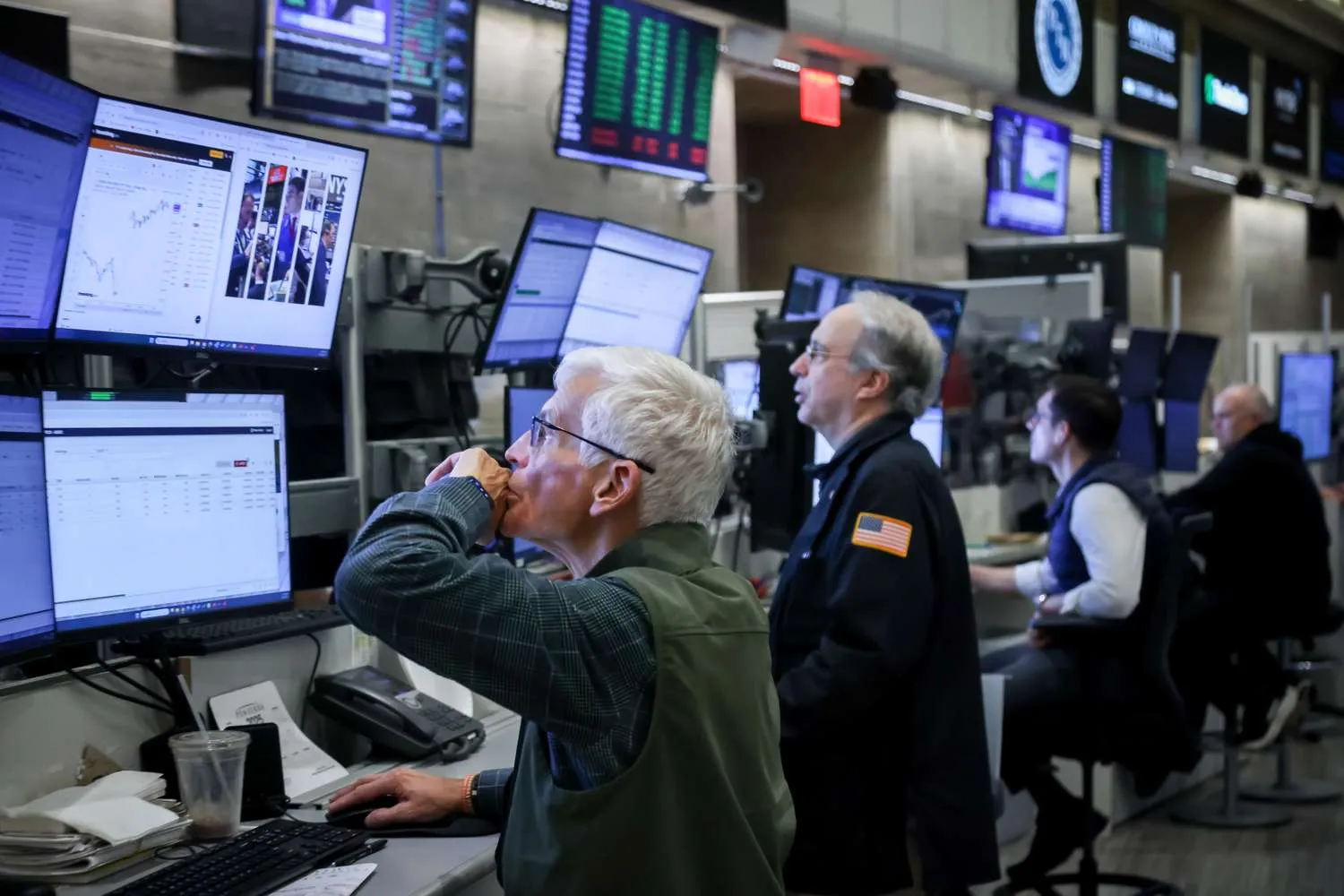

US equities ended 2025 on a soft note, with the S&P 500 slipping 0.7% on Wednesday and finishing close to the session’s lows. Market breadth was notably weak, as only about 3% of index constituents managed to post gains — the most widespread selloff since May.
Technology-heavy benchmarks also came under pressure. The Nasdaq 100 declined 0.8%, while Bloomberg’s Magnificent Seven Index, which tracks the largest mega-cap tech names, fell 0.7%. Every sector within the S&P 500 closed lower. In fixed income, selling picked up later in the day, pushing the 10-year US Treasury yield higher by roughly five basis points.
Despite the late-year pullback, the S&P 500 still delivered a solid performance in 2025, finishing the year up 16%. That advance followed two exceptional years in which the index surged more than 20% annually. This year’s gains came even after a sharp April downturn, when markets were rattled by President Donald Trump’s announcement of a more aggressive-than-expected tariff framework.
The final trading days of 2025 have been characterized by thin liquidity and subdued price action, defying hopes for a traditional “Santa Claus rally” that often lifts stocks
into year-end. Trading activity on Wednesday was particularly light, with volume running about 45% below the 20-day average.
“I’m genuinely surprised we haven’t seen a more convincing Santa Claus rally,” said Steve Sosnick, chief strategist at Interactive Brokers. “If markets fail to even attempt some year-end window dressing, that could be a meaningful signal as we head into the new year.”
On the economic front, an unexpected drop in initial jobless claims during the Christmas week caught investors’ attention. Bloomberg economist Eliza Winger attributed the decline largely to quirks in seasonal adjustment rather than a sudden improvement in labor conditions. She noted that ongoing softness in hiring could give the Federal Reserve more flexibility to cut interest rates in 2026.
Corporate news was mixed. Nike Inc. stood out as one of the day’s few winners, climbing more than 4% after reports showed the company’s chief executive had purchased shares, a move often viewed as a vote of confidence.
Elsewhere in the mega-cap space, Nvidia Corp. slipped 0.6% following a report that it had approached Taiwan Semiconductor Manufacturing Co. to help boost production of its H200 artificial intelligence chips. Tesla Inc. ended the session down 1%, giving back earlier gains. The stock retreated after prominent investor Michael Burry said he does not currently hold a short position, despite having labeled the company “ridiculously overvalued” earlier in the month.
Biotechnology stocks delivered some of the most dramatic moves of the day. Vanda Pharmaceuticals Inc. surged 25% after announcing that the US Food and Drug Administration approved its treatment for motion sickness.
Axsome Therapeutics jumped 23% after its drug received priority review for potential use in treating Alzheimer’s disease. In contrast, Corcept Therapeutics Inc. tumbled 50% after regulators rejected its therapy for a specific type of high blood pressure.
Shares of mining companies came under pressure after CME Group raised margin requirements on precious metals futures for the second time in a week, following heightened volatility. Newmont Corp., one of the sector’s largest players, fell 2%. The updated margin rules take effect after the close of trading on Wednesday.
Berkshire Hathaway Inc. finished the day little changed. The session marked the final day for legendary investor Warren Buffett at the company. In November, Buffett said he would be “going quiet,” signaling the close of a historic chapter for both the firm and the broader investment world.
Image
Gallery.


Subscribe to our newsletter!
As a leading independent research provider, TradeAlgo keeps you connected from anywhere.

Explore
Related posts.

